
TMJ CONDITIONS
TMJ Arthritis / Degenerative Joint Disease
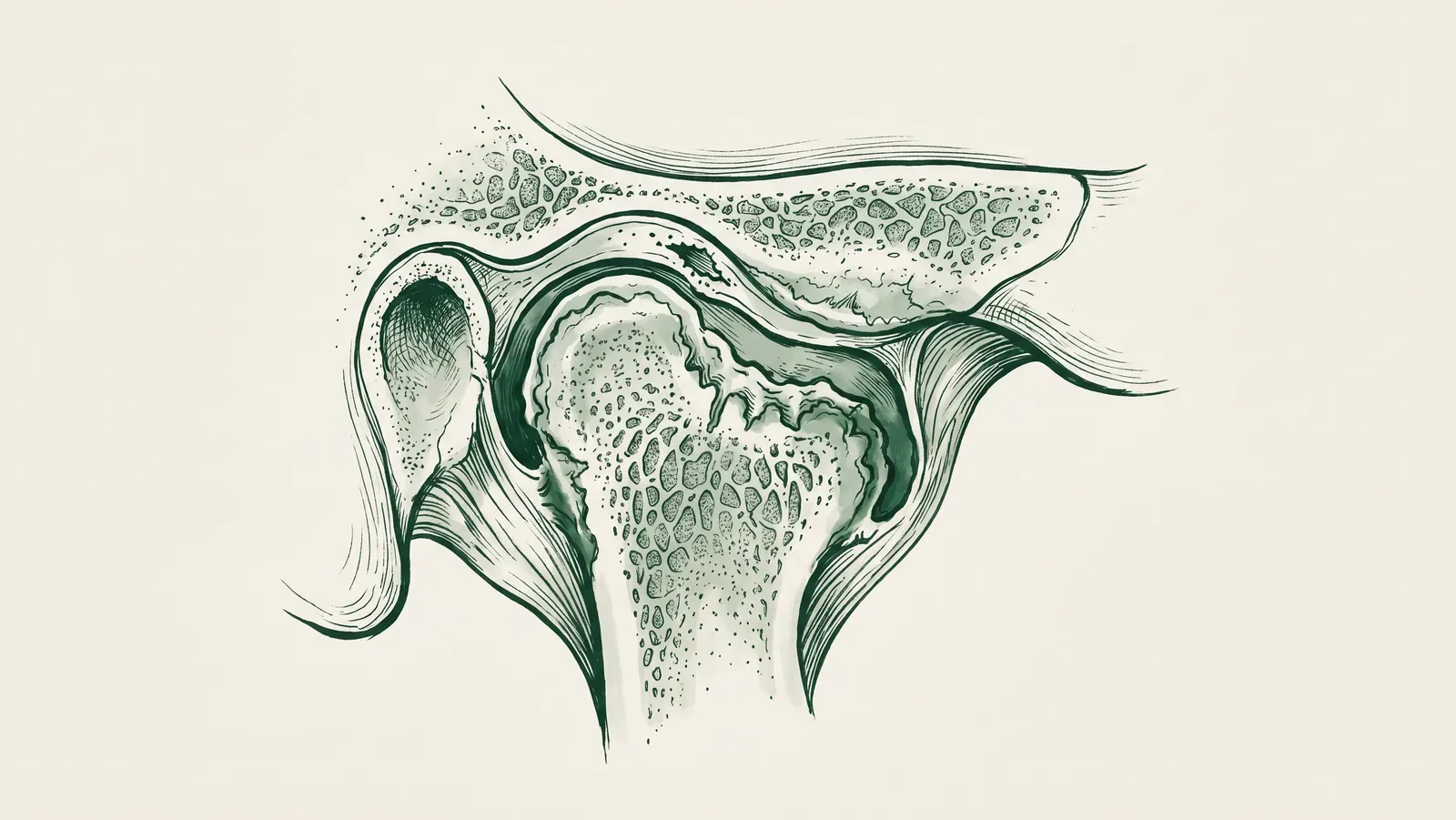
Arthritis of the temporomandibular joint (TMJ) occurs when the joint wears down or becomes inflamed. Similar to joints in the knees or hips, the TMJ can develop "wear and tear" over time.

Overview
What this means for you.
TMJ arthritis is the gradual wear or inflammation of the temporomandibular joint, similar to arthritis in the knees or hips. Symptoms include jaw pain, stiffness, joint noises, and difficulty opening the mouth fully. Early conservative care is usually effective; surgery is reserved for advanced cases where jaw function needs to be restored.
- Onset
- Typically gradual
- First-line care
- Physiotherapy · medication · bite splints
- When surgical
- Advanced cases requiring functional restoration
Inside the joint
Is this for you
Common symptoms of TMJ arthritis:
- Jaw pain, particularly when chewing or speaking
- Stiffness or restricted jaw movement
- Clicking, popping, or grinding noises
- Facial pain or headaches
- Difficulty opening the mouth fully
What to expect
Prognosis and treatment pathway
This condition typically progresses gradually. Care is matched to the stage of disease and the impact on jaw function.
-
Early stage
Early treatment options, such as physiotherapy, medication, or bite splints, can help manage symptoms effectively.
-
Advanced stage
In more advanced cases, surgery may be necessary to restore jaw function.
Common questions
Common questions about TMJ arthritis
What causes TMJ arthritis?
Arthritis of the temporomandibular joint (TMJ) occurs when the joint wears down or becomes inflamed. Similar to joints in the knees or hips, the TMJ can develop "wear and tear" over time.
What are the symptoms?
Common symptoms include jaw pain (particularly when chewing or speaking), stiffness or restricted jaw movement, clicking, popping, or grinding noises, facial pain or headaches, and difficulty opening the mouth fully.
What is the prognosis?
This condition typically progresses gradually. Early treatment options, such as physiotherapy, medication, or bite splints, can help manage symptoms effectively. In more advanced cases, surgery may be necessary to restore jaw function.
Related
Related care at Auckland TMJ Centre
Same surgeons
OMS Specialists
When surgery is required, it is carried out at OMS Specialists, our co-located oral and maxillofacial surgery practice. Same surgeons, same accredited facility, full-scope surgical care across jaw, facial, oral, and skin conditions.
Visit OMS Specialists