
TMJ CONDITIONS
TMJ Disorders
TMJ disease refers to disorders affecting the temporomandibular joint, the small joint that connects your jaw to your skull. When this joint becomes inflamed, damaged, or misaligned, it can lead to pain, jaw clicking or locking, headaches, and difficulties with eating or speaking.

Quick answer
What this means for you.
TMJ disease covers disorders of the temporomandibular joint, including arthritis and degeneration, disc displacement, and TMJ pathology (benign growths, cysts, and rarely malignant tumours). At Auckland TMJ Centre we diagnose and treat all forms of TMJ disease. We use the Visual Analogue Scale (VAS) and Jaw Functional Limitation Scale (JFLS-8) to assess pain and function, and use minimally invasive techniques where possible.
- Conditions covered
- Common TMJ conditions across degenerative, inflammatory, traumatic, and mechanical presentations
- Common symptoms
- Pain · clicking · locking · headaches
- Assessment tools
- VAS · JFLS-8
- Multidisciplinary team
- Surgeons · Physiotherapists · Rheumatologists · Oral Medicine · Neurologists · Chronic Pain
- Care approach
- Specialists work together as required for each TMJ presentation
Understanding the joint
What are TMJ disorders?
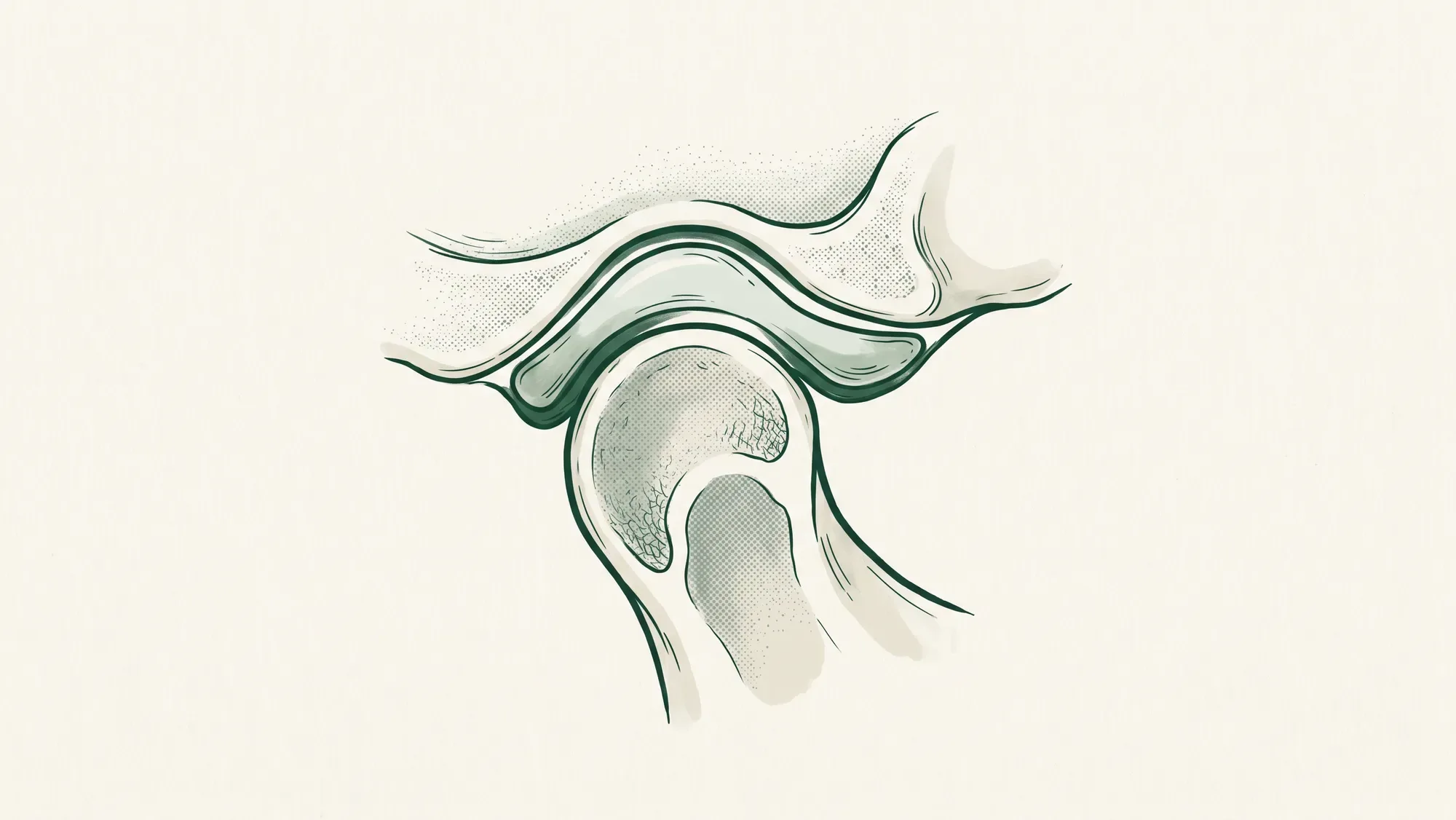
Within the jaw joint, there is a small disc that acts as a cushion between the bones. Sometimes this disc slips out of its normal position, a condition known as disc displacement.
Disc displacement may occur with or without reduction of the disc. Treatment decisions are not based solely on the reduction of the disc.
Arthritis of the temporomandibular joint (TMJ) occurs when the joint wears down or becomes inflamed. Similar to joints in the knees or hips, the TMJ can develop "wear and tear" over time.
The joint, illustrated
The spectrum
Common TMJ conditions, one specialist practice
TMJ Arthritis / Degenerative Joint Disease Arthritis of the temporomandibular joint (TMJ) occurs when the joint wears down or becomes inflamed. Similar to joints in the knees or hips, the TMJ can develop "wear and tear" over time. Read the guide → Symptomatic TMJ Disc Displacement Within the jaw joint, there is a small disc that acts as a cushion between the bones. Sometimes this disc slips out of its normal position, a condition known as disc displacement. Read the guide →
Inflammatory Joint Disease affecting the TMJ Inflammation of the temporomandibular joint caused by autoimmune, degenerative, infectious, or inflammatory conditions, resulting in pain and dysfunction.
TMJ Pathology Although uncommon, the temporomandibular joint can be affected by various pathological conditions, including benign growths, cysts, and malignant tumours. These may develop from bone, cartilage, or surrounding soft tissues. Read the guide → Traumatic Injuries involving the TMJ Damage to the temporomandibular joint and its associated structures caused by external physical force, such as falls, accidents, or blows to the jaw.
TMJ Ankylosis A condition characterised by fibrous or bony fusion of the temporomandibular joint, leading to restricted or absent jaw movement.
TMJ Recurrent Dislocation Repeated displacement of the mandibular condyle from its normal position within the temporomandibular joint, requiring repeated relocation.
Arthralgia / Myalgia involving the TMJ Pain originating from the temporomandibular joint (arthralgia) or the muscles of mastication (myalgia) without significant structural joint pathology.
Symptoms
TMJ disease may present as:
- Pain in the jaw joint
- Jaw clicking or locking
- Reduced mouth opening
- Dietary changes due to symptoms
Seek assessment promptly
- Localised swelling or facial asymmetry
- Persistent or worsening jaw pain
- Numbness or tingling in the face or jaw
- Facial weakness or droop
- Shifting or changing bite
How diagnosis works
A triage-based approach to timely, appropriate care
- 01
Triage
Depending on your symptoms, we may initially recommend a consultation with one of our affiliated physiotherapists, particularly if your condition is likely to respond well to non-surgical treatments. For more complex or longstanding cases, a direct appointment with one of our TMJ surgeons may be advised.
- 02
Imaging before your first visit
To support your consultation, our surgeons may request an MRI scan of the jaw joints before your first visit.
- 03
Your consultation
By the time you meet your surgeon, the relevant clinical and radiological information is available to support a thorough diagnosis and a personalised treatment plan.
- 04
Standardised assessment
The Visual Analogue Scale (VAS) measures pain intensity, while the Jaw Functional Limitation Scale (JFLS-8) evaluates your ability to eat, speak, and move your jaw. These scores assist us in accurately diagnosing your condition, tracking progress, and tailoring your treatment plan accordingly.
From conservative to surgical
Care is matched to the stage of disease and the impact on jaw function
Conservative first
Early treatment options, such as physiotherapy, medication, or bite splints, can help manage symptoms effectively. Treatment options may include jaw exercises, bite splints, or medications.
Minimally invasive
At Auckland TMJ Centre we diagnose and treat all forms of TMJ disease, using minimally invasive techniques where possible.
When surgery is needed
If pain or locking becomes severe or persistent, surgical intervention may be recommended. In more advanced cases, surgery may be necessary to restore jaw function.
The team around you
Multidisciplinary by design
Care is multidisciplinary. Surgeons, physiotherapists, rheumatologists, oral medicine, neurologists, and chronic pain teams contribute as required, ensuring each patient receives the right combination of specialist expertise for their TMJ presentation.
Explore allied health →Common questions
Common questions about TMJ disorders
What is TMJ disease?
TMJ disease refers to disorders affecting the temporomandibular joint, the small joint that connects your jaw to your skull. When this joint becomes inflamed, damaged, or misaligned, it can lead to pain, jaw clicking or locking, headaches, and difficulties with eating or speaking.
How is TMJ disease diagnosed?
During your initial assessment and follow-up appointments, we use standardised tools to monitor your pain and jaw function. The Visual Analogue Scale (VAS) measures pain intensity, while the Jaw Functional Limitation Scale (JFLS-8) evaluates your ability to eat, speak, and move your jaw. These scores assist us in accurately diagnosing your condition, tracking progress, and tailoring your treatment plan accordingly.
How is TMJ disease treated at Auckland TMJ Centre?
At Auckland TMJ Centre we diagnose and treat all forms of TMJ disease, using minimally invasive techniques where possible.
What causes TMJ arthritis?
Arthritis of the temporomandibular joint (TMJ) occurs when the joint wears down or becomes inflamed. Similar to joints in the knees or hips, the TMJ can develop "wear and tear" over time.
What is TMJ disc displacement?
Within the jaw joint, there is a small disc that acts as a cushion between the bones. Sometimes this disc slips out of its normal position, a condition known as disc displacement.
How common is TMJ pathology?
Although uncommon, the temporomandibular joint can be affected by various pathological conditions, including benign growths, cysts, and malignant tumours. These may develop from bone, cartilage, or surrounding soft tissues and can significantly affect jaw function, structure, and comfort.
Related
Condition guides at Auckland TMJ Centre
Same surgeons
OMS Specialists
When surgery is required, it is carried out at OMS Specialists, our co-located oral and maxillofacial surgery practice. Same surgeons, same accredited facility, full-scope surgical care across jaw, facial, oral, and skin conditions.
Visit OMS Specialists