
TMJ CONDITIONS
TMJ Pathology
Although uncommon, the temporomandibular joint can be affected by various pathological conditions, including benign growths, cysts, and malignant tumours. These may develop from bone, cartilage, or surrounding soft tissues and can significantly affect jaw function, structure, and comfort.

Overview
What this means for you.
TMJ pathology covers benign growths, cysts, and (rarely) malignant tumours of the temporomandibular joint. These can arise from bone, cartilage, or surrounding soft tissues and may present as swelling or facial asymmetry, persistent jaw pain, limited jaw movement, or numbness in the face or jaw. At Auckland TMJ Centre our surgeons work with radiologists and pathologists to ensure thorough investigation and appropriate treatment.
- Prevalence
- Uncommon
- Origin tissues
- Bone · cartilage · soft tissue
- Spectrum
- Benign growths · cysts · malignant tumours
- Multidisciplinary
- Surgeons + radiologists + pathologists
Inside the joint
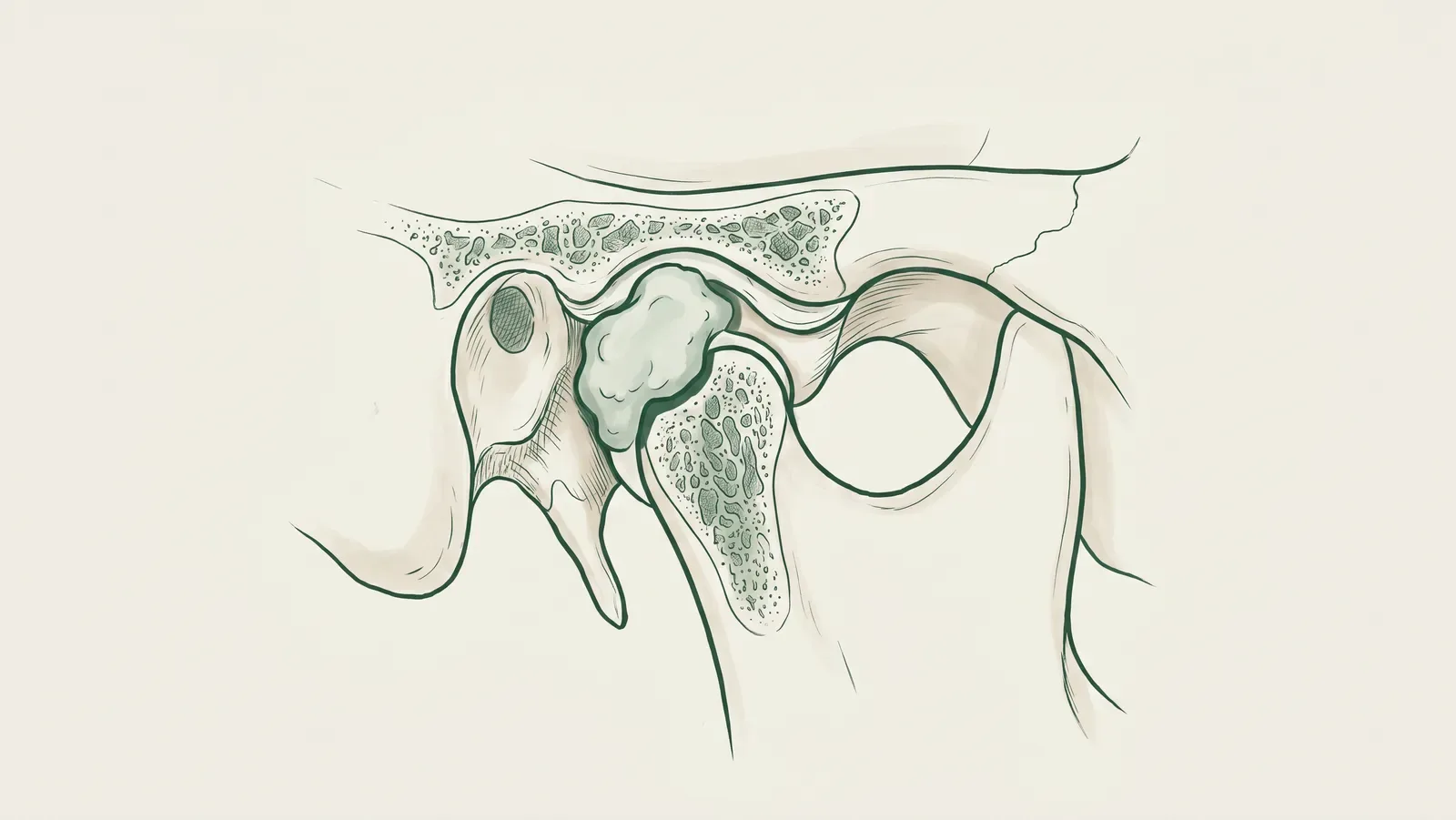
Is this for you
Common symptoms of TMJ pathology:
- Localised swelling or facial asymmetry
- Persistent or worsening jaw pain
- Limited or uneven jaw movement
- Numbness or tingling in the face or jaw
What to expect
Diagnosis and management
Early detection and accurate diagnosis are essential.
-
Benign conditions
Most benign conditions can be managed with conservative surgery and regular monitoring.
-
Malignant tumours
Malignant tumours, though rare, require a coordinated multidisciplinary approach.
-
Multidisciplinary care
At Auckland TMJ Centre, our surgeons collaborate closely with radiologists and pathologists to ensure thorough investigation and appropriate treatment for every case.
Common questions
Common questions about TMJ pathology
How common is TMJ pathology?
Although uncommon, the temporomandibular joint can be affected by various pathological conditions, including benign growths, cysts, and malignant tumours. These may develop from bone, cartilage, or surrounding soft tissues and can significantly affect jaw function, structure, and comfort.
What are the warning symptoms?
Symptoms may include localised swelling or facial asymmetry, persistent or worsening jaw pain, limited or uneven jaw movement, and numbness or tingling in the face or jaw.
How is TMJ pathology diagnosed and treated?
Early detection and accurate diagnosis are essential. Most benign conditions can be managed with conservative surgery and regular monitoring. Malignant tumours, though rare, require a coordinated multidisciplinary approach. At Auckland TMJ Centre, our surgeons collaborate closely with radiologists and pathologists to ensure thorough investigation and appropriate treatment for every case.
Related
Related care at Auckland TMJ Centre
Same surgeons
OMS Specialists
When surgery is required, it is carried out at OMS Specialists, our co-located oral and maxillofacial surgery practice. Same surgeons, same accredited facility, full-scope surgical care across jaw, facial, oral, and skin conditions.
Visit OMS Specialists