
TMJ TREATMENTS
Open Joint Surgery – Disc Repositioning / Discectomy
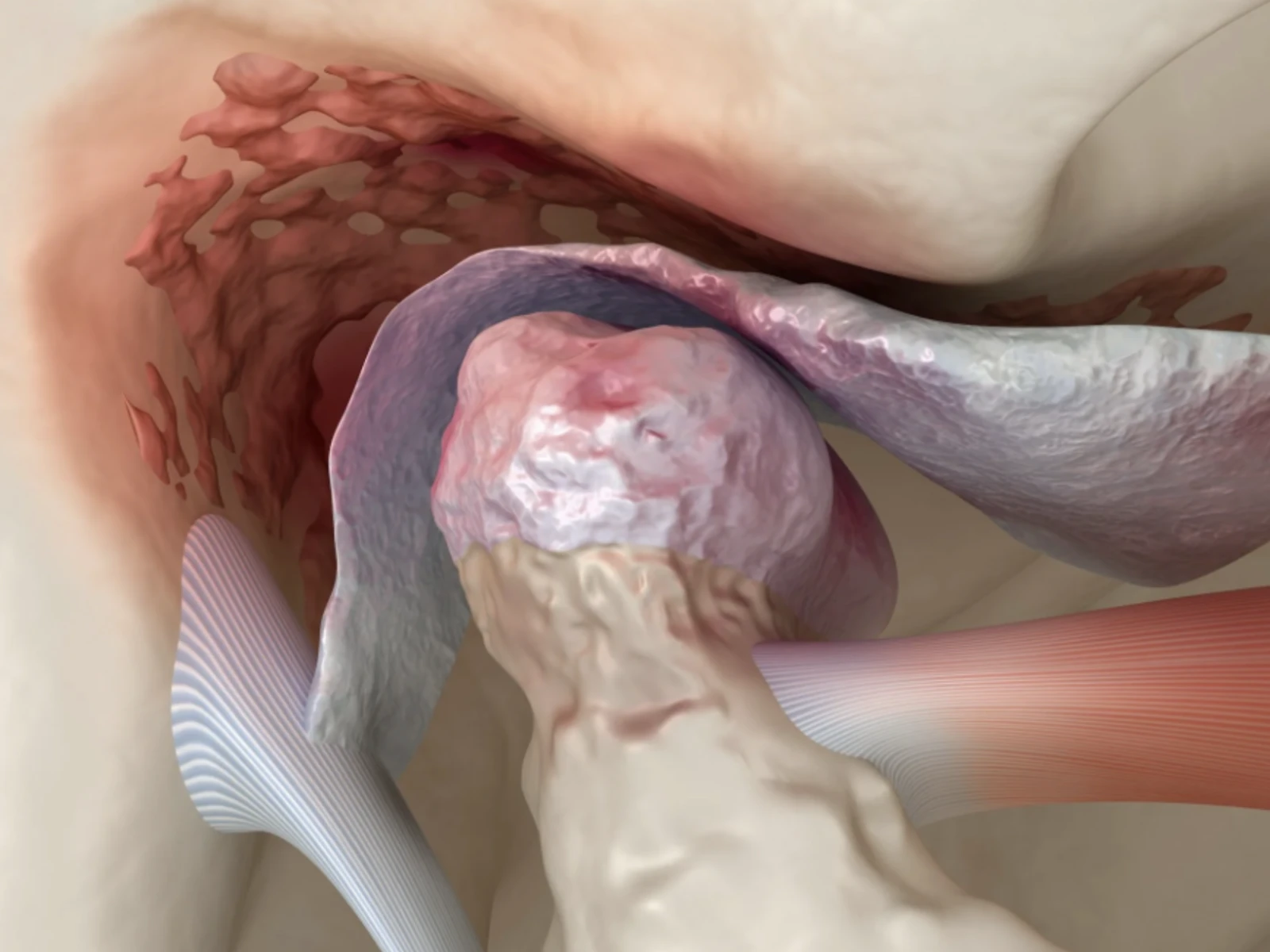
This surgical approach provides direct access to the TMJ through an incision near the ear. It is used to reposition or remove a damaged joint disc when other treatments have been unsuccessful.
Overview
What this means for you.
Open joint surgery provides direct access to the TMJ through an incision near the ear, used to reposition or remove a damaged joint disc when other treatments have been unsuccessful. This procedure is often recommended for severe or long-standing joint disorders, with careful patient selection enabling excellent long-term outcomes.
- Procedure
- Direct access to TMJ via preauricular incision
- When
- When other treatments have been unsuccessful
- Recovery
- Several weeks
- Diet
- Soft diet during early healing
- Follow-up
- Physical therapy
Is this for you
Open joint surgery is typically considered when:
- There has been limited improvement following arthroscopy
- A damaged joint disc needs to be repositioned or removed
- You present with severe or long-standing TMJ disorders
- End-stage TMJ disorders require more extensive intervention
Recovery
Recovery after open joint surgery
- 01
Early recovery
Early stagesPatients may experience swelling, bruising, and limited jaw movement during the early stages.
- 02
Healing
Several weeksRecovery usually takes several weeks. Physical therapy and a soft diet are commonly advised to support healing.
- 03
Long-term outcome
Beyond recoveryWith careful patient selection, long-term outcomes can be excellent.
What to expect
What to expect after the procedure
-
Swelling and bruising
Patients may experience swelling, bruising, and limited jaw movement during the early stages.
Common questions
Common questions about open joint surgery
When is open joint surgery recommended?
Open joint surgery is typically reserved for patients who have had limited improvement following arthroscopy or those presenting with severe, end-stage TMJ disorders requiring more extensive intervention. The procedure is often recommended for severe or long-standing joint disorders.
How long is recovery?
Recovery usually takes several weeks. Patients may experience swelling, bruising, and limited jaw movement during the early stages. Physical therapy and a soft diet are commonly advised to support healing.
What can I expect as a long-term outcome?
With careful patient selection, long-term outcomes can be excellent.
Related
Related care at Auckland TMJ Centre
Same surgeons
OMS Specialists
When surgery is required, it is carried out at OMS Specialists, our co-located oral and maxillofacial surgery practice. Same surgeons, same accredited facility, full-scope surgical care across jaw, facial, oral, and skin conditions.
Visit OMS Specialists